
Australian baby and child passport photos the APO way
Australian infant passport photos need a clear face on a plain white or light grey background in the correct Australian Passport Office (APO) size range. Toys, patterned blankets, and adult hands in the frame are common problems. This guide outlines a calm home method, how AU millimetres differ from US squares and UK head bands, and what to ask a lab before you lodge. Confirm the current Photo Guidelines on passports.gov.au before you print or lodge.
APO-style rules for children in plain language
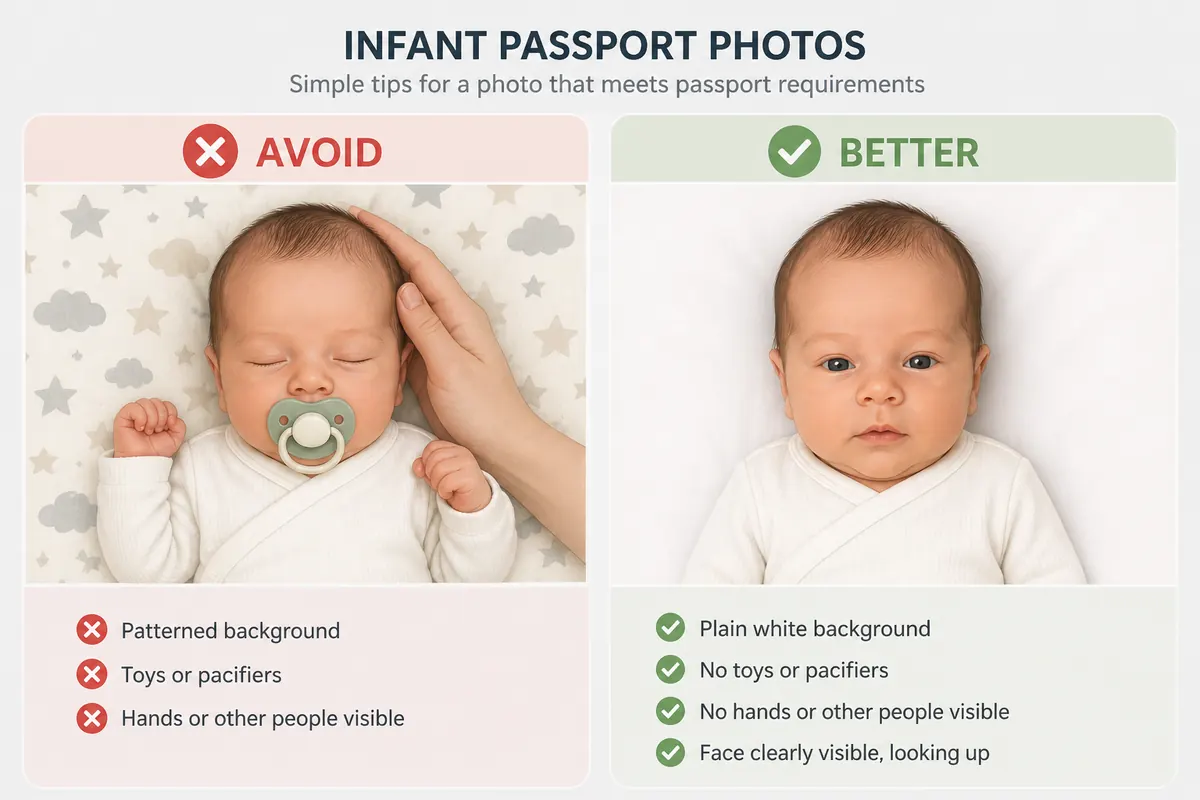
Only the child should appear—no parents, hands, toys, or pacifiers. Use a plain white or light grey background. Head height must still match the APO diagram after cropping.
Lay infants on a plain sheet and shoot from above. Eyes open when possible; APO guidance has historically allowed slightly closed eyes for infants when eyes cannot stay open—verify the current wording on passports.gov.au.
Children use the same outer size range and chin-to-crown band as adults. Age changes how you capture the photo, not the millimetre rules on the finished print.
- No other person visible—only the child
- Lay infants on a plain sheet; shoot from above
- Eyes open when possible; confirm infant eye notes on APO pages
- Same size range and head-height rules as adult AU photos
Practical home capture for newborns
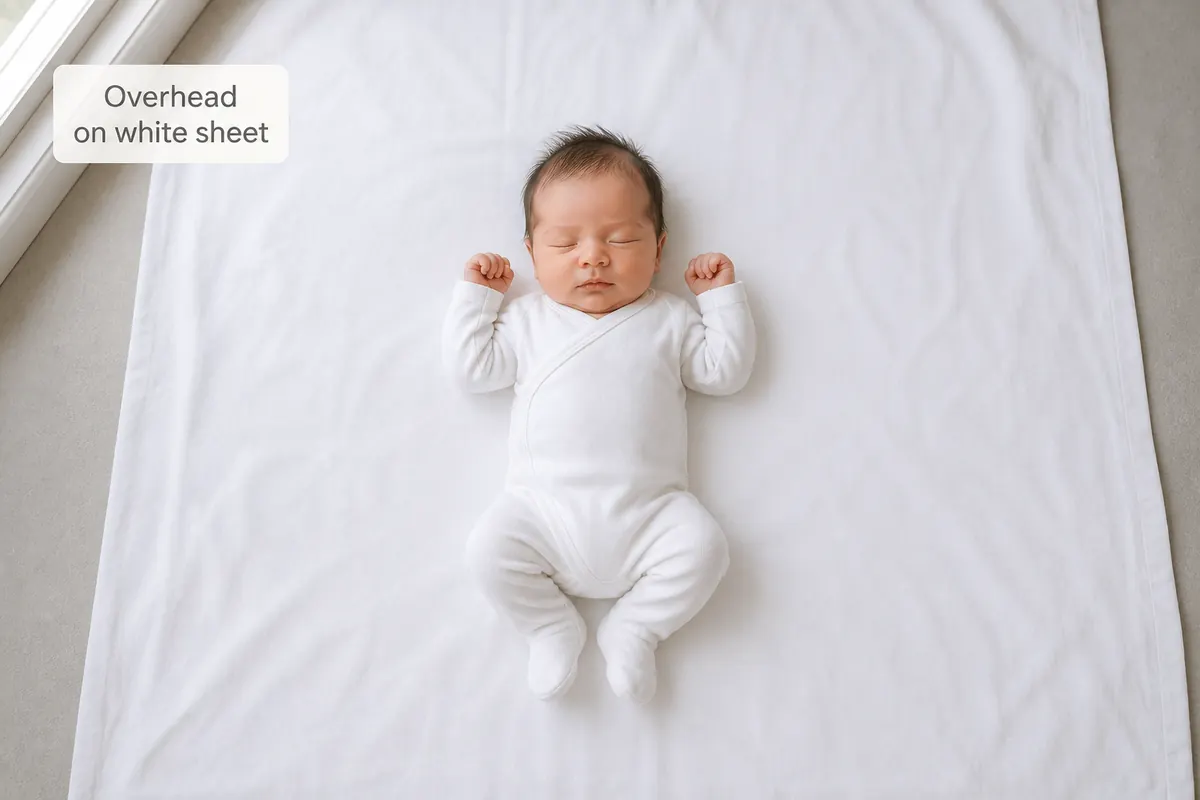
Photograph after a feed when the baby is calm. Remove hats unless required for religious reasons with the face fully visible. A second person can hold a sheet behind the baby without appearing in frame.
Aim for open eyes and a settled expression. Remove pacifiers for the final selection. Shoot bursts so you can choose a sharp frame. Soft daylight near a window usually beats harsh flash.
Choose clothing without large logos near the chin. Busy collars draw attention away from the face in a small print. Solid medium tones contrast better with a light sheet than pale cream onesies.
- Use daylight near a window
- Keep toys and dummies out of shot
- Take several frames—you typically need two identical prints
- Short sessions; pause when the baby tires
Australian size range and chin-to-crown
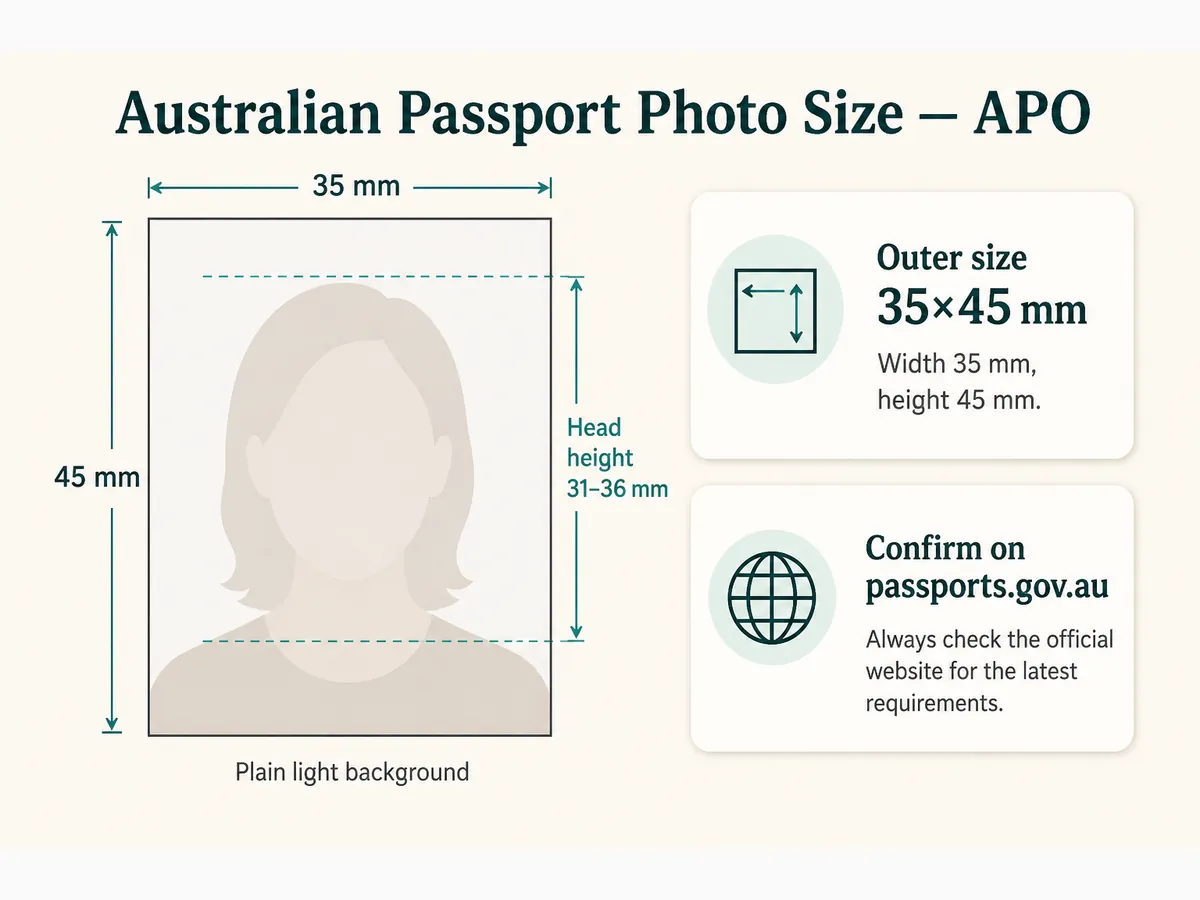
APO states photos must be 35–40 mm wide and 45–50 mm high. Inside the frame, chin-to-crown height must be 32–36 mm. Many shops still talk about “35×45”—a common in-range size—but you must still verify chin-to-crown after printing.
Crop with an Australian template, not a US 2×2 tool. UK 35×45 prints are not automatically interchangeable: UK head bands and preferred print backgrounds differ. Re-crop from the original for Australia.
Applications typically need two identical good-quality colour prints. Ask labs for Australian passport size per current APO guidance and hand them a cropped file when allowed.
- Print size: 35–40 × 45–50 mm
- Chin-to-crown: 32–36 mm
- Two identical colour prints (usual requirement)
- Taken within the last six months (confirm on APO)
Lighting, timing, and age stages
Soft daylight works better than harsh flash. Short sessions beat long ones—babies tire quickly. If the baby turns away, pause and try again rather than accepting a blurred profile.
Newborns: overhead sheet method. Sitting infants: plain backdrop, hands out. Toddlers: brief seated sessions. Never put siblings in one passport photo.
Schedule photo day before you book non-refundable travel for lodgement, so you have buffer for a retake.
Working with a lab or Australia Post partner
Hand them the cropped file on a phone or USB when allowed. Saying “make it passport size” without a file often produces the wrong template (sometimes a US square or a generic ID crop).
Ask specifically for Australian passport size and mention the 32–36 mm chin-to-crown band. Measure the finished prints before you leave when you can.
Paying a shop does not skip APO review. Check background, hands, and head height yourself.
Problems to avoid
If the first lab set fails, change only the cited issue. Replacing a good background because the size was wrong wastes a calm baby session.
- Adult hands visible
- Patterned blankets
- Toys in frame
- Wrong country size template (US 2×2 or generic ID)
- Soft focus from movement
- Chin-to-crown outside 32–36 mm after print
Paper quality and handling
APO looks for high-quality colour prints on suitable photo paper (guidance cites heavy-weight glossy paper expectations—confirm current gsm notes on passports.gov.au). Plain office paper is not enough.
Label the spare set lightly on a separate envelope, not on the photo face. Keep prints flat; bent corners cause resubmission delays.
Before lodgement — parent checklist
If a post office or agent rejects the set, ask which rule failed—background, hands, or size—so the next attempt is targeted.
- Plain light sheet or wall, no patterns
- No adult hands in the crop
- Australian size template—not US 2×2
- Chin-to-crown 32–36 mm on the print
- Identical prints counted for the form
- You rechecked passports.gov.au Photo Guidelines for children
Official sources and limits of this guide
passports.gov.au is the authority for APO photo guidelines, infant notes, and lodgement channels. Our free cropper helps you frame a practical 35×45 AU template on your device; it does not replace official review.
This page is a practical photography and sizing guide—not immigration, medical, or legal advice. When in doubt, follow APO wording.
Ready to crop your photo?
Free online tool—pick your country template (US 2×2 or UK 35×45), align your head, and download. No account needed.