
UK baby and child passport photos without the guesswork
UK baby passport photos use the same 35×45 mm size as adult photos. The hard part is a plain cream or light grey background and a clear face without toys, dummies, or adults in the frame. This guide covers a practical home approach for newborns and children, how UK size differs from a US 2×2 square, and what to check before you post or upload. Always confirm current child photo notes on GOV.UK for your exact route—paper and online paths differ.
What GOV.UK-style child rules usually mean in practice
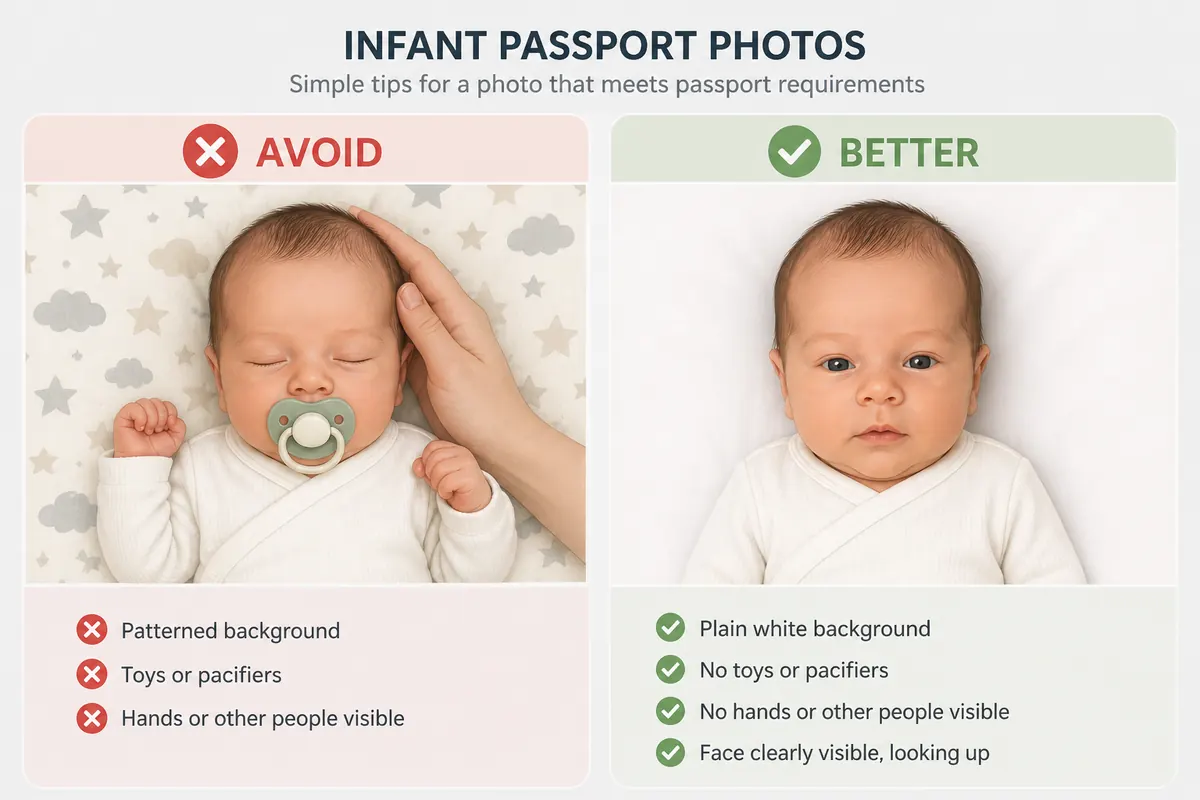
No other person may appear in the photo. For babies, lay them on a plain cream or light grey sheet and photograph from above. Toys, dummies, bottles, and supporting hands must stay out of the final crop.
Try for open eyes and a plain expression. Infants may have a little flexibility when awake, but a clear face is safer than a deep sleep shot. Mouth closed when you can; avoid a wide cry.
After cropping, head height must still sit in the UK published band for a 35×45 mm portrait. A cute overhead shot that is cropped as a US square will fail a UK application.
- Only the child in the frame
- Eyes open when possible
- No dummies, toys, or hands visible
- Same head-height rules after cropping as adult UK photos
- Recent photo that looks like the child now
Photographing infants at home
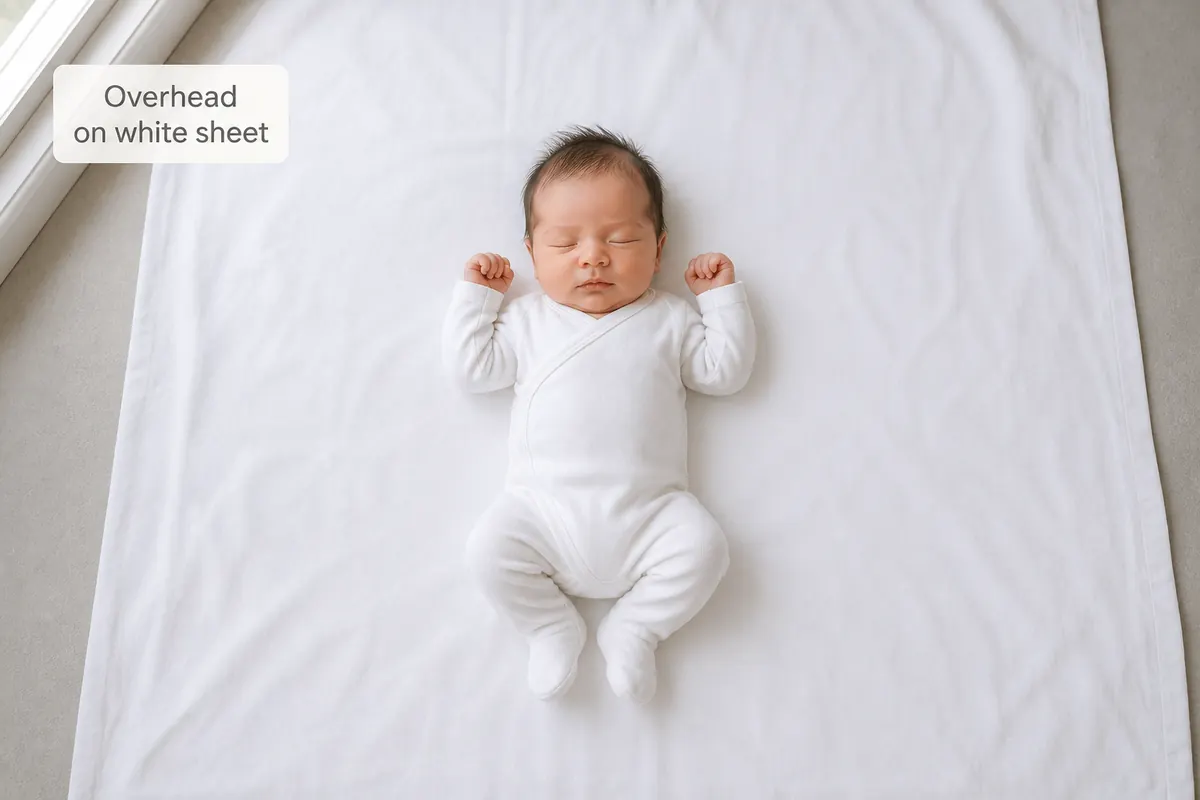
Natural daylight works best. Take many frames to catch eyes open. A parent can sit just outside the frame to calm the baby. A second adult can distract from outside the frame with a soft toy held high—keep that toy out of the photo.
Remove pacifiers before the final selection. Avoid hooded outfits that cast shadows on the forehead. A simple top keeps the face evenly lit.
Most parents find lying-down home photos easier for newborns than booths. Booths can work for older toddlers who sit still; newborns usually need the sheet method.
- Short sessions beat long ones
- Shoot bursts; pick the sharpest open-eye frame later
- Keep the camera parallel to the face
- Skip studio props, baskets, and patterned wraps
UK size: 35×45 mm (not a US 2×2 square)
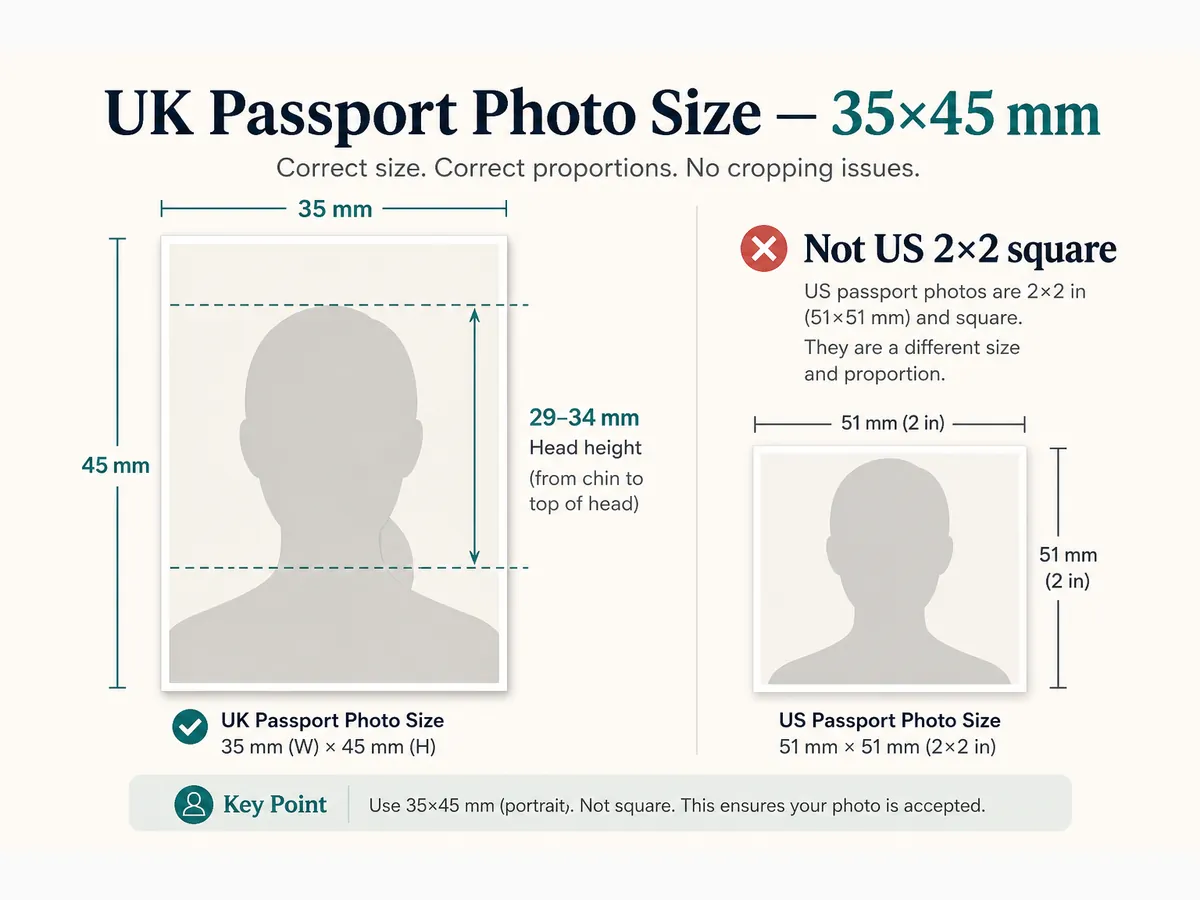
UK passport photos are typically 45 mm high by 35 mm wide—a taller rectangle, not a square. Crown-to-chin height must fall in the published millimetre band (commonly discussed as about 29–34 mm on GOV.UK-style guidance). Confirm the current numbers on GOV.UK before you print.
Do not stretch a US 2×2 file into a UK rectangle. That distorts the face. Re-crop from the original with a UK template, then print or upload.
Paper applications usually need two identical prints. Online child applications follow digital file rules and any official photo-check steps—run those before you pay fees when offered.
- Outer size: typically 35×45 mm
- Head height: follow current GOV.UK millimetre band
- Do not use a US square crop for a UK form
- Keep the uncropped original for a second attempt
Lighting and background for UK prints
Even, soft light. Avoid busy blankets. UK guidance for printed photos often prefers cream or light grey backgrounds—not a bright US-style pure white wall if your notes specify cream or light grey.
Keep the camera parallel to the face. Distorted wide-angle close-ups make head-height checks harder. Soft daylight near a window is usually enough; avoid flash that forces a squint.
A patterned hospital blanket or car-seat liner will fail even if the baby’s expression is perfect. Transfer to a plain sheet first.
Newborns, sitters, and toddlers
Newborns: overhead on a plain cream or light grey sheet. Sitters: plain backdrop behind the child with adult hands outside the crop. Toddlers: short sessions; one sharp face beats a forced grin.
Siblings cannot share one passport photo. Each child needs an individual image. Clothing should be simple and solid enough that the face stays the focus on a small print.
Frequent problems (and how to fix them)
Prefer a sharp face over a perfectly centred body. You can crop for position; you cannot recover motion blur.
- Adult hands visible — retake on a sheet; crop hands out only if nothing else is compromised
- Toys or dummies in frame — remove and reshoot
- Patterned background — change the sheet or wall
- Motion blur — shorter sessions, more bursts, better light
- Wrong size (US 2×2 used by mistake) — re-crop with a UK 35×45 template
- Corner bends on posted prints — use a stiffened envelope
Online check vs paper post
When an online child application offers a photo check, run it before you pay fees. A failed check is cheaper to fix early than after lodgement.
If posting a paper application, treat the prints as fragile documents: cardboard backing, no folding. Countersignature or other paper-only steps (when required) are separate from the photo composition rules—read GOV.UK for your form.
Our free browser tool can apply a UK-style 35×45 template on your device. It helps framing; it does not replace HM Passport Office review or GOV.UK photo checks.
Quick UK infant checklist
If any item fails, retake or re-crop before you submit. Infant applications already take calendar time—photo rework is usually cheaper early.
- Cream or light grey plain background
- Only the child in frame—no hands, toys, or dummies
- 35×45 mm crop with head height in range
- Sharp eyes and face; awake look preferred
- Two identical prints or digital file as your route requires
- You rechecked GOV.UK child photo notes for this application
Official sources and what this guide is not
Use GOV.UK for child passport photo rules, digital upload limits, and whether your paper form needs a countersignature. Size charts and home tips here are practical helpers only.
This page does not give immigration, medical, or legal advice. If guidance on GOV.UK conflicts with a third-party tip, follow GOV.UK.
Ready to crop your photo?
Free online tool—pick your country template (US 2×2 or UK 35×45), align your head, and download. No account needed.