Pick a solid color that stands out from the background
Most passport photo rejections are about background, head size, or expression—but clothing color still matters. If your shirt matches a white wall, your shoulders disappear and the crop looks wrong. This guide answers what color to wear for a passport photo in plain language: safe solids for US white backgrounds, notes for UK and Australian light backgrounds, necklines and fabrics that photograph cleanly, and a quick check before you crop. Official rules rarely list a mandatory shirt color—they care that your face and outline stay clear. Always confirm current photo rules for your country before you submit.
The one rule that covers most countries
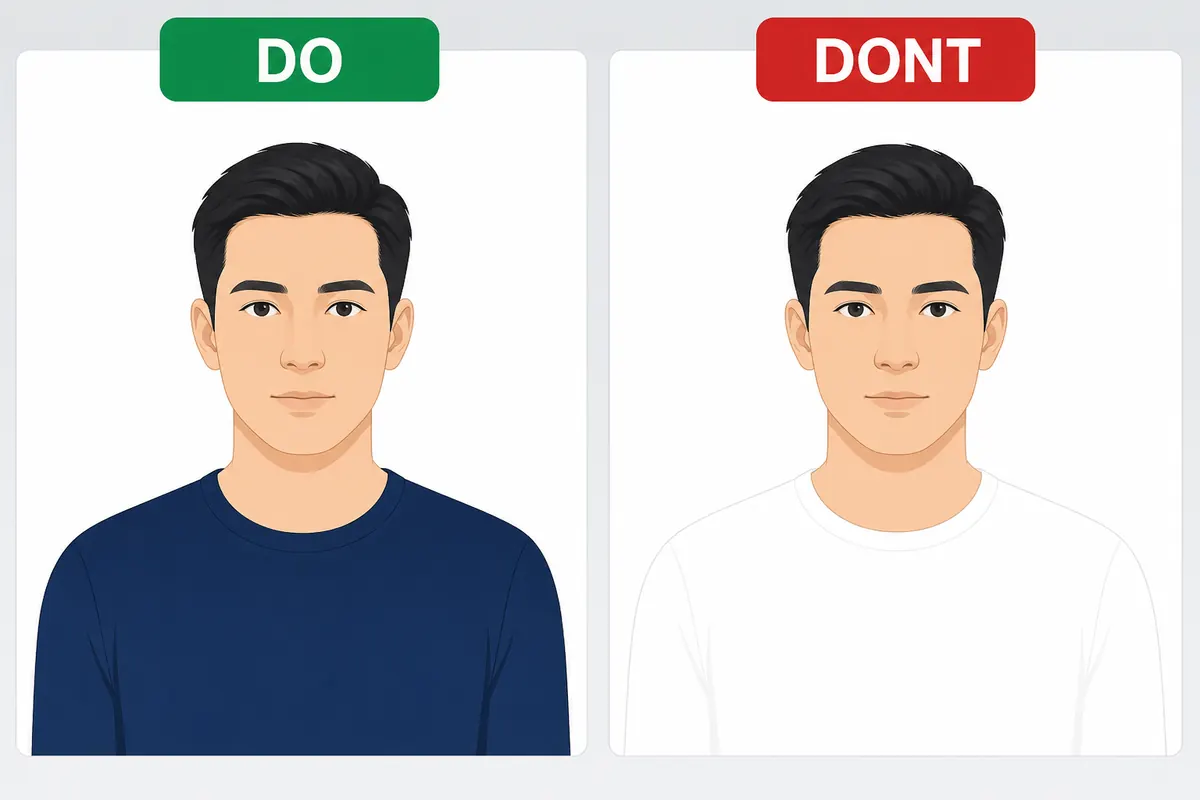
Wear everyday clothes in a solid color that clearly contrasts with the background. For a US passport photo the background should be plain white or off-white, so medium-to-dark solid tops are the safest choice. Light cream or white tops often blend into the wall and make the photo look incomplete.
Official rules rarely list “must wear navy.” They care that your face and shoulders are clear, with no uniform look and no clothing that covers the face. Contrast is the practical way to meet that standard at home.
Think of clothing as outline insurance: reviewers and automated checks need to see where you end and the background begins. A beautiful pale blouse that vanishes against the wall fails that job even if the face is sharp.
- Solid color beats busy patterns
- Contrast with the background beats matching it
- Street clothes beat uniforms or camouflage
- Face fully visible—no scarves pulled over the chin
Best colors for a white or off-white US background
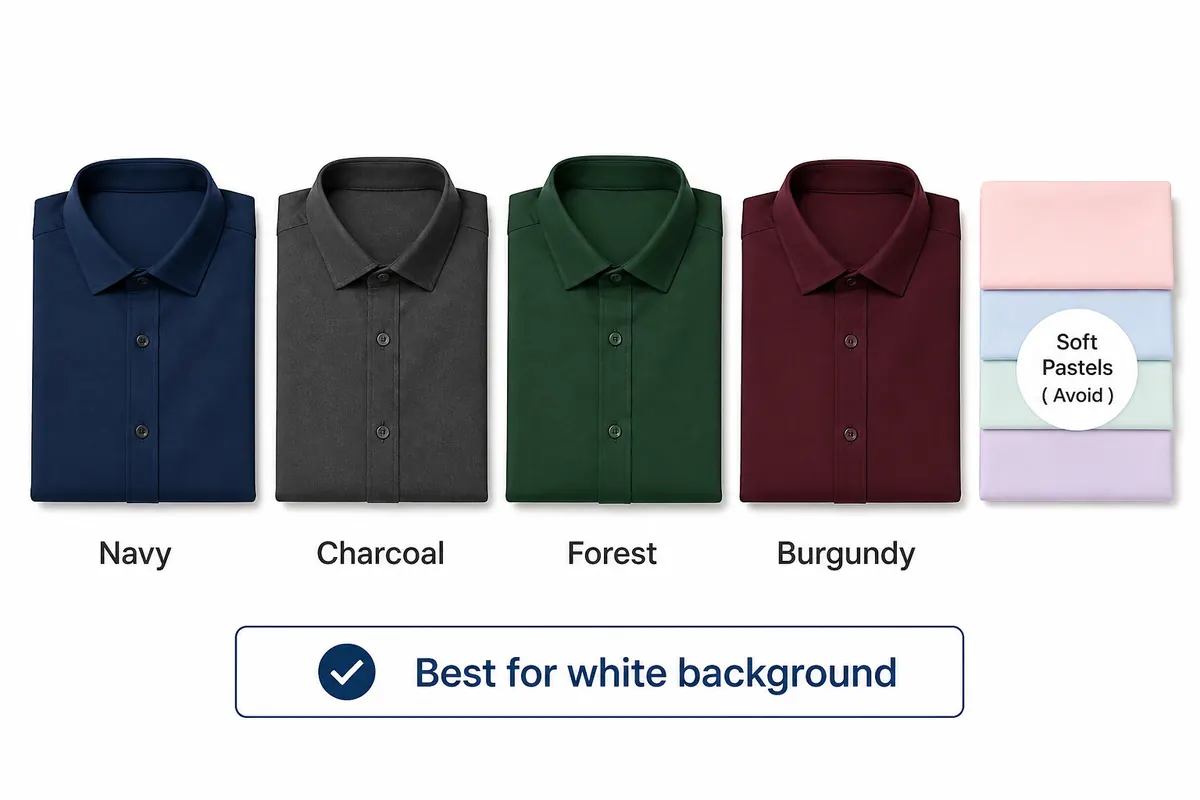
These colors usually photograph well on a white wall and stay clear after you crop to 2×2 inches:
You do not need a blazer. A plain crew-neck or collared shirt in one of these colors is enough. Keep logos away from the neckline so they do not sit under your chin in the final crop.
If you only own pale shirts, borrow or buy an inexpensive solid tee for the shoot. One calm retake in a contrasting top is cheaper than a rejected application over a weak outline.
- Navy or dark blue — classic, high contrast, works for most skin tones
- Charcoal or medium gray — neutral and professional without looking like a uniform
- Burgundy, forest green, or deep teal — fine if the fabric is matte and solid
- Black — acceptable if lighting is even; watch for lost detail under the chin
Colors and styles to avoid
Skip anything that fights the background or hides your outline:
If your only clean shirt is light gray, step back from the wall, improve the light, and check the preview after cropping. If shoulder edges disappear, change the shirt.
Red or neon can work when solid and matte, but harsh dyes sometimes create uneven color under phone cameras. Prefer mid-tones you already know look natural in daylight.
- White, ivory, or pale pastel tops on a white background
- Busy plaids, stripes, florals, or large logos near the face
- Uniforms, camouflage, or clothing that looks like a uniform (unless your case explicitly allows it)
- Shiny satin or sequins that create hot spots in the light
- Hoodies with deep shadows under the face, or scarves covering the jawline
Necklines, layers, and fabric texture
Crew necks and simple collars usually crop cleanly. Very deep V-necks can look odd in a tight head-and-shoulders frame; a modest neckline keeps attention on the face.
Thin straps and bare shoulders are often fine when the country allows them and the background stays plain—but a light cardigan or solid tee is easier to light evenly at home. Heavy turtlenecks can cast a shadow under the chin if the lamp sits too high.
Matte cotton, jersey, and wool blends photograph more predictably than silk, satin, or metallic knits. Texture is fine; specular shine is not.
- Prefer matte solids over shiny fabrics
- Keep logos and badges away from the chin area
- Avoid deep hood shadows
- Layers are OK if the top visible layer is a solid contrasting color
UK and Australian backgrounds are not US white
UK passport photos often use a cream or light grey background—not bright US white. Australian guidance also prefers a plain light background. The same contrast rule applies: do not wear a top that matches that light tone.
On cream or light grey, navy and charcoal still work. Soft beige or pale pink can disappear the same way white does on a US wall. Crop with the correct country template so head size and background color both match the application you are filing.
- US → white / off-white background → prefer medium–dark solids
- UK → cream / light grey → still avoid pale tops that match the wall
- AU → plain light background → same contrast habit as UK-style walls
- Never assume one country’s photo wardrobe rules override another country’s background notes
Glasses, head coverings, jewelry, and makeup (clothing context)
Clothing color is only one checklist item. US rules generally disallow glasses unless you have a medical statement—glare causes many refusals. Religious or medical head coverings may be allowed when the full face stays visible. Small jewelry is usually fine if it does not hide the jawline or create large flashes of light.
Makeup, if worn, should look like you on a normal day—not a beauty-filter face. Heavy contour that changes apparent face shape can work against identification. Expression still matters: mouth closed, eyes open, looking at the camera.
A perfect navy shirt will not save a toothy smile, a busy patterned wall, or glasses glare. Fix clothing after lighting and background are under control—or at the same time, but never instead of those basics.
Kids, babies, and family shoots
Children and babies should wear solid tops or onesies that contrast with a plain light sheet or wall. Avoid adult hands, toys, and patterned blankets in the frame—those fail more often than shirt color.
Matching family outfits look nice for holiday cards and wrong for passports: each person needs an individual photo. Do not put siblings in one frame.
For infants, skip hooded rompers that shade the forehead. A simple contrasting onesie plus a plain sheet is the reliable combo.
How to check clothing before you crop
Take the photo in even daylight or two lamps at eye level. Stand a few feet from a plain wall. Put on your chosen solid top, then shoot several frames.
Our free browser tool crops on your device and does not replace official rules. Use it after the shirt and lighting look right, then print two identical photos for paper forms or export a JPEG for online renewal.
- Zoom the phone preview: can you see both shoulders clearly against the wall?
- Crop to the official size (US 2×2 or UK/AU 35×45) with head guides
- If the shirt melts into the background, change clothes and reshoot—do not “fix” contrast
- Run through the on-site checklist before download or print
Quick decision checklist
If the preview fails the shoulder test, change the shirt before you pay fees or mail forms. Clothing is one of the few fixes that takes two minutes.
- Background plain white or light? Wear a solid medium–dark top
- Avoid white-on-white and busy patterns near the face
- No uniforms or camouflage unless your case allows them
- Matte fabric; logos away from the chin
- Shoulders still visible after crop in a zoomed preview
- Confirm country size and background before you submit
Ready to crop your photo?
Free online tool—pick your country template (US 2×2 or UK 35×45), align your head, and download. No account needed.